What is Standard Work?
Standard work (also called standardized work) is the documented sequence of steps, timing, and methods that represent the current best-known way to perform a task. It's not a permanent, unchangeable procedure—rather, it's a living baseline that captures what works today and provides a starting point for improvement.
The concept comes from the Toyota Production System and Lean manufacturing. Standard work serves three primary purposes: ensuring consistency across operators and shifts, providing a training baseline for new team members, and establishing a reference point against which improvements can be measured.
Without standard work, each operator may perform tasks differently, making it impossible to identify what's working, what isn't, and what could be improved.
Why It Matters for Manufacturing Teams
For frontline manufacturing teams, standard work provides clarity and consistency:
- Reduces variation — Everyone performs tasks the same proven way
- Improves quality — Consistent methods produce consistent results
- Enables training — New team members have clear guidance
- Supports improvement — You can't improve what isn't standardized
- Increases safety — Documented procedures include safety steps
- Facilitates problem-solving — Deviations from standard work help identify issues
Standard work also respects frontline expertise. The best standard work is developed with input from the operators who perform the tasks, capturing their knowledge in documented form.
Key Components
Effective standard work documentation typically includes:
- Task sequence — The specific steps in order
- Timing — Expected duration for each step or the overall task
- Quality points — Critical checks or criteria
- Safety considerations — Required PPE, hazards, precautions
- Tools and materials — What's needed to perform the task
- Visual aids — Photos, diagrams, or videos where helpful
Standard Work and Process Audits
Standard work and process audits have a symbiotic relationship. Standard work defines what "good" looks like, while process audits verify that work is performed according to those standards. Audit findings often reveal that standard work needs updating—either because conditions have changed or because a better method has been discovered.
Many manufacturers struggle not with creating standard work, but with verifying it's consistently followed. Process audits close this gap.
How Zeltask Supports Standard Work
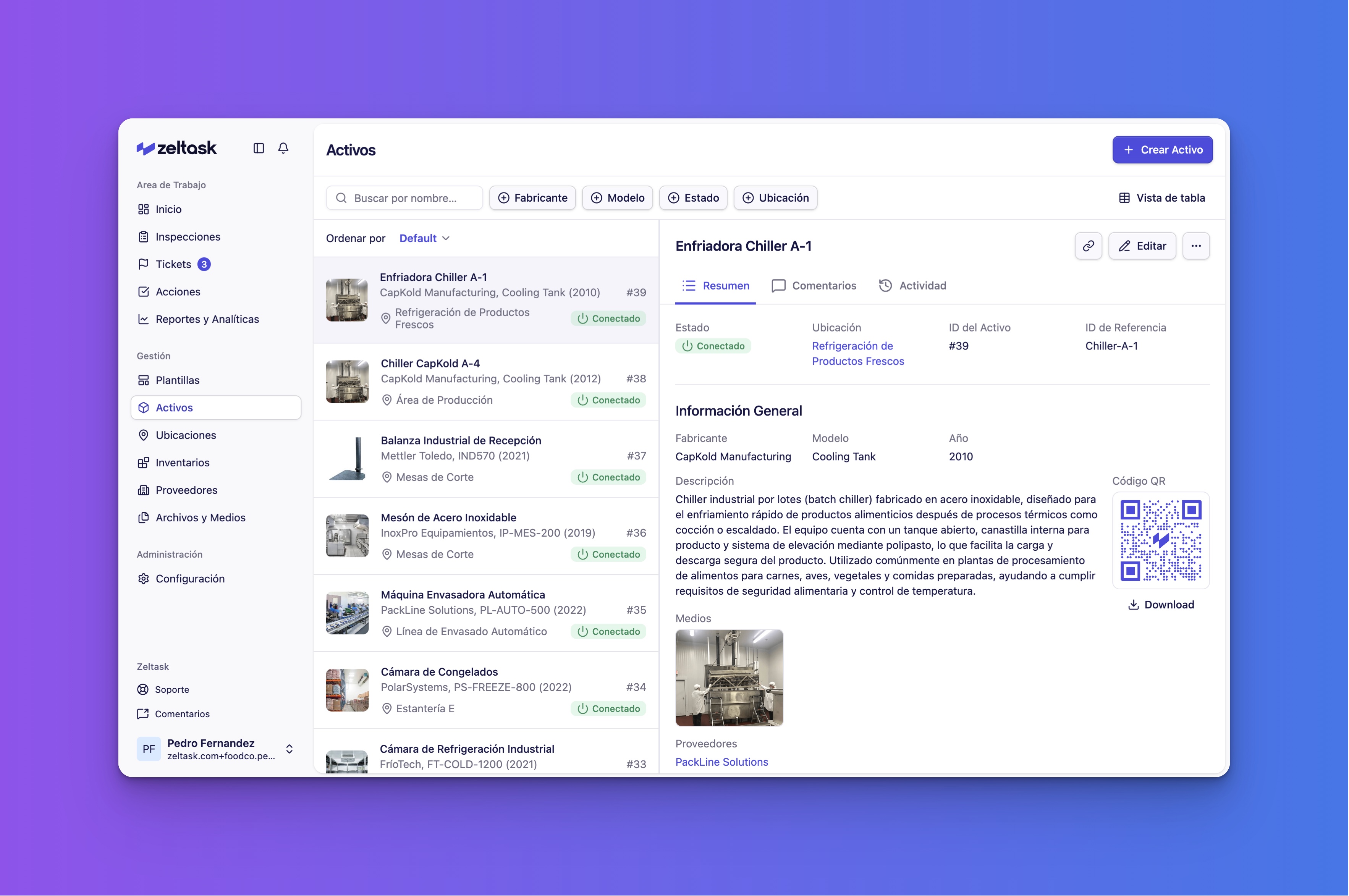
Zeltask supports standard work through Procedure Templates—digital checklists that guide operators through defined steps with Yes/No/N/A responses. These templates can include instructions, required evidence, and conditional logic that adapts based on responses.
Scheduled inspections verify that standard work is being followed, while the Actions module captures deviations and improvements. Over time, this creates a documented record of how standard work evolves.