Quick Definition
Connected frontline workers are manufacturing team members who have access to real-time information, structured digital workflows, and integrated communication channels — enabling them to make informed decisions and act on issues immediately.
What Are Connected Frontline Workers?
Connected frontline workers are operators, technicians, and supervisors who are integrated into their factory's digital ecosystem rather than operating in an information silo. Instead of relying on paper checklists, verbal handovers, and bulletin boards, connected workers access real-time operational data, follow standardized digital procedures, and report issues through structured channels — all from the shop floor.
The concept goes beyond simply providing mobile devices. True connection means frontline teams can access the right data at the right time, communicate bidirectionally with management and other departments, and participate actively in improvement processes. It requires a platform that integrates maintenance, quality, and safety workflows into a single system accessible to everyone involved in daily operations.
Connected frontline workers bridge the gap between enterprise-level systems (ERP, MES, IoT) and the people who actually drive daily production outcomes. Without this bridge, digital transformation investments generate data that never reaches the people who need it most.
Why It Matters for Manufacturing Teams
The disconnect between factory systems and frontline workers is one of the most persistent barriers to operational excellence in manufacturing:
- Digital transformation depends on people — Automated systems collect data, but people contextualize, interpret, and act on it
- Knowledge retention — As experienced workers retire, connected platforms capture best practices in digital workflows rather than losing institutional knowledge
- Productivity and quality — Workers with access to digital checklists, step-by-step procedures, and contextual guidance execute tasks with fewer errors and less rework
- Safety and compliance — Real-time access to safety protocols, hazard alerts, and compliance requirements reduces incidents and regulatory violations
- Employee engagement — Workers who feel informed and empowered engage more deeply, improving retention and reducing hiring costs
The gap between systems and workers persists due to legacy data silos, software designed for engineers rather than operators, delayed or decontextualized data, and lack of cross-functional integration between departments.
Key Elements of a Connected Workforce
- Real-time information access — Updated equipment status, task instructions, safety alerts, and production data on demand
- Standardized digital guidance — Structured workflows that reduce variability across shifts and operators
- Two-way communication — Workers report anomalies, share observations, and provide feedback — not just receive instructions
- Cross-functional visibility — Maintenance, quality, and safety teams work from the same system
- Measurable outcomes — Action completion rates, inspection compliance, and issue resolution tracked digitally
How Zeltask Supports Connected Frontline Workers
Zeltask is purpose-built as a connected operations platform for frontline manufacturing teams. Every module connects to the others, creating a single system where frontline workers can report, act, and improve:
- Tickets let any team member formally document deviations, risks, or improvement opportunities with photos and context
- Actions convert observations into trackable tasks with ownership, deadlines, and status tracking
- Inspections provide standardized digital checklists that verify conditions and trigger follow-up automatically
- Templates embed procedures and best practices into digital workflows accessible from the shop floor
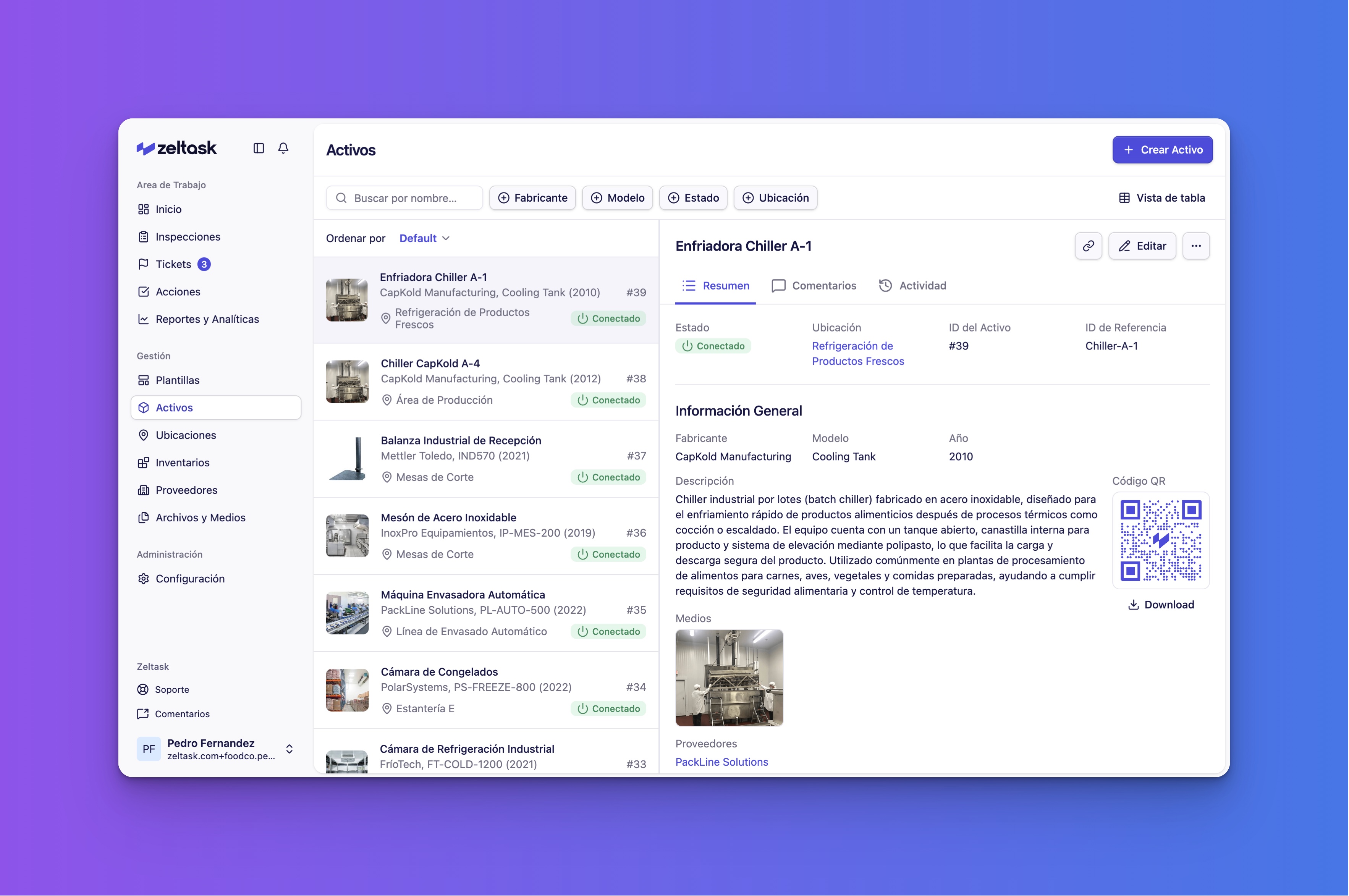
- Assets and Locations provide context via QR codes for immediate reporting without disrupting workflow
This cross-module integration eliminates information silos and ensures that detection, action, and follow-up happen in a single connected system.