Quick Definition
PDCA is an iterative four-step improvement cycle — Plan, Do, Check, Act — used to test changes, measure results, and standardize improvements in a structured, repeatable way.
What is PDCA?
PDCA (Plan-Do-Check-Act), also known as the Deming Cycle or Shewhart Cycle, is a structured method for implementing and verifying improvements. It breaks the improvement process into four repeatable phases:
- Plan — Identify the problem, analyze root causes, and design a potential solution
- Do — Implement the solution on a small scale or as a pilot
- Check — Measure the results and compare them against expectations
- Act — If the solution works, standardize it. If not, learn from the results and start a new cycle
The power of PDCA lies in its iterative nature. Rather than attempting a single large change, teams make small adjustments, verify results, and build on what works. Each cycle produces learning that informs the next.
PDCA is one of the most widely used frameworks in continuous improvement, Lean manufacturing, and quality management.
Why It Matters for Manufacturing Teams
For frontline manufacturing teams, PDCA provides a simple, disciplined structure for making improvements:
- Reduces risk — Testing changes at small scale before full deployment
- Encourages experimentation — Creates a safe framework for trying new approaches
- Builds evidence — Each cycle generates data about what works and what doesn't
- Prevents guesswork — Decisions are based on measured outcomes, not assumptions
- Supports standardization — Successful changes become part of standard work
PDCA is accessible to teams at all levels. It doesn't require specialized expertise — just disciplined thinking and a willingness to learn from results.
Key Components
Each PDCA phase has specific activities:
- Plan: Define the problem clearly, gather data, identify root causes, propose a countermeasure
- Do: Execute the plan on a limited basis, document what happens
- Check: Compare results to expectations, analyze gaps, identify what worked
- Act: Standardize the improvement if successful, or adjust the plan and cycle again
How Zeltask Supports PDCA
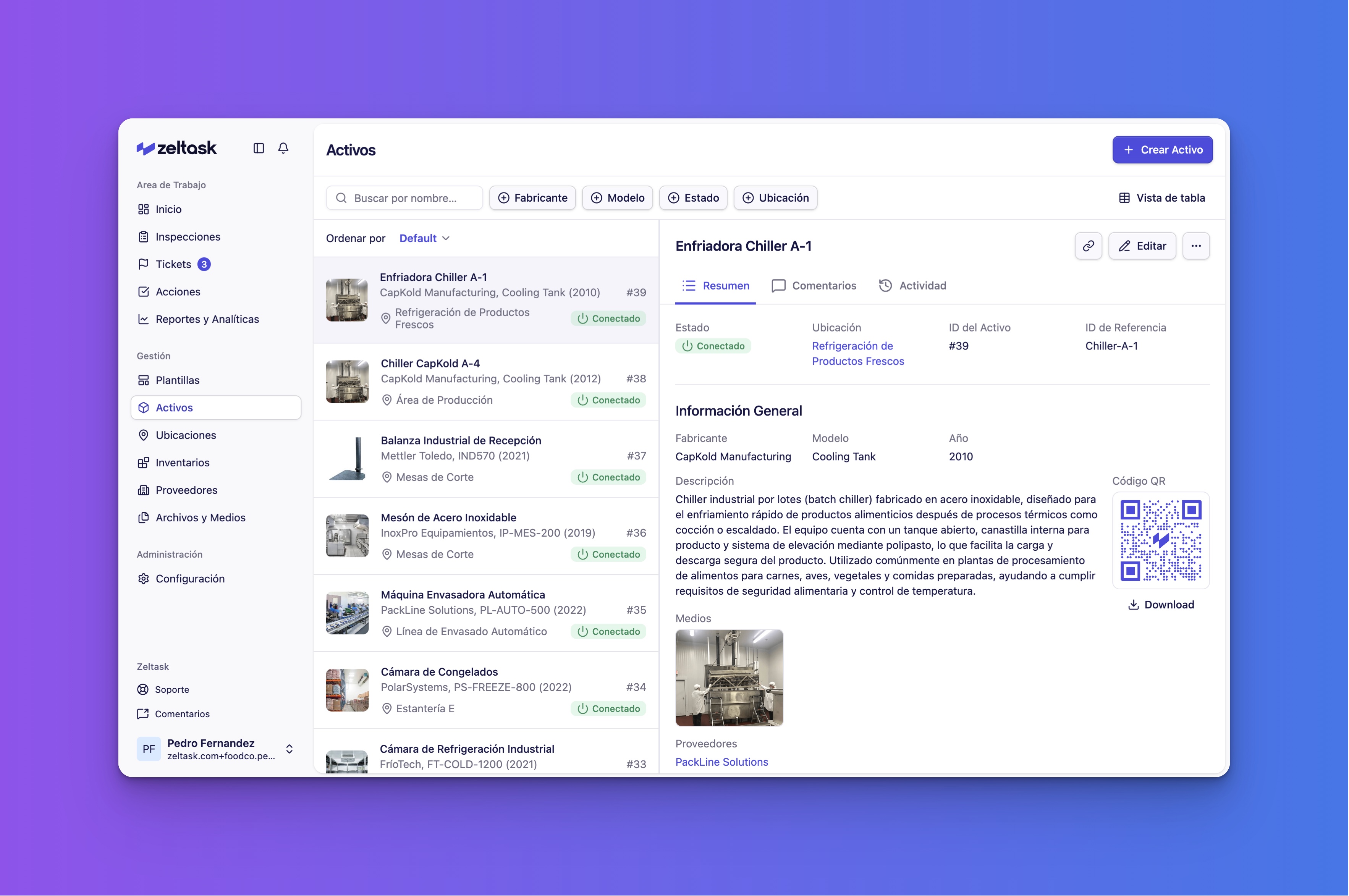
Zeltask supports the PDCA cycle through its integrated modules. During the Plan phase, Inspections and Tickets capture the data needed to identify problems. During Do, the Actions module tracks implementation with clear ownership and deadlines. During Check, inspection results and action completion data provide measurable outcomes. During Act, successful improvements are embedded in Templates as standardized procedures for consistent execution.