

What Is the Continuous Improvement Model? A Guide for Manufacturing Teams

Felipe Borja
Co-founder & CEO
Introduction
Manufacturing teams face constant pressure to reduce costs, improve quality, and respond faster to changing demands. Large transformation initiatives often promise results but struggle to deliver lasting change. The gap between strategy and daily execution remains a persistent challenge.
The continuous improvement model offers a different approach. Instead of relying on infrequent, large-scale projects, it builds a system of small, consistent improvements that compound over time. For frontline teams and plant leaders alike, this model provides a practical framework for identifying problems, testing solutions, and sustaining better practices.
This guide explains what the continuous improvement model is, why it matters for manufacturing operations, and how connected operations platforms turn improvement efforts into measurable, lasting results.
What Is the Continuous Improvement Model?
The continuous improvement model is a structured, repeatable cycle for improving processes and eliminating waste. It operates on a fundamental principle: small, consistent improvements create significant performance gains over time.
You may encounter this model under different names—Continuous Process Improvement (CPI), Lean CI, or Kaizen-based improvement cycles. While each approach has its own emphasis, they share a common purpose: help teams identify issues early, test solutions quickly, and embed better practices into everyday work.
What makes the model powerful is its flexibility. It applies equally to machine operators, supervisors, plant managers, and corporate teams. It works at individual workstations, across production lines, throughout entire facilities, and across global networks. Because it follows a cycle rather than a linear path, improvement becomes an ongoing discipline rather than a one-time effort.
In practice, the continuous improvement model transforms improvement from a periodic project into a daily mindset.
Core Components of the Continuous Improvement Model
While every organization adapts the model to its context, most follow these core steps:
1. Identify Opportunities
Improvement begins with visibility. Frontline workers, supervisors, and engineers are closest to the work and often the first to notice waste, bottlenecks, quality issues, or safety risks.
Structured routines help surface these observations consistently. Daily management meetings, shop floor walks, and performance reviews create regular opportunities for teams to flag issues. Operational data and direct feedback from operators add essential context.
2. Analyze Root Causes
Once a problem is identified, teams must understand what causes it. Tools like the 5 Whys, Pareto analysis, or process mapping help uncover the true source of issues.
The goal is not to assign blame but to address root causes rather than symptoms. Effective root cause analysis prevents the same problems from recurring and ensures that solutions target the right areas.
3. Plan and Implement Solutions
The model encourages small, low-risk changes. Teams might test a solution at one workstation or run a short pilot before broader rollout. Cross-functional collaboration ensures that proposed changes are practical and aligned with operational goals.
This step emphasizes learning quickly and adjusting based on results.
4. Measure Outcomes
After implementing a change, teams verify whether it worked. They track relevant metrics—productivity, downtime, defect rates, safety incidents, or throughput—to assess impact.
Measurement creates a feedback loop that informs whether to refine, expand, or abandon a solution. Without data, improvement efforts become guesswork.
5. Standardize and Sustain
When a change delivers results, it becomes part of standard work. Teams update procedures, work instructions, and training materials to reflect the new practice.
This step prevents backsliding. Improvements that aren't standardized tend to fade as teams revert to old habits. Embedding changes into documented processes ensures they persist.
6. Repeat the Cycle
Continuous improvement has no endpoint. Once one issue is resolved, teams identify the next opportunity. Over time, this creates a culture where improvement is part of everyday work rather than an occasional initiative.
Why the Continuous Improvement Model Matters for Manufacturing
For manufacturing teams, the continuous improvement model delivers value beyond incremental process gains:
Operational agility — Teams can respond faster to changing customer requirements, supply chain disruptions, and market shifts.
Process consistency — By reducing variation, the model improves quality and lowers defect rates.
Cost efficiency — Eliminating waste and reducing downtime increases throughput while lowering operating costs.
Employee engagement — Involving frontline workers in improvement efforts builds ownership and strengthens retention.
Foundation for transformation — Stable, standardized processes are prerequisites for successful digital transformation and Industry 4.0 initiatives.
The continuous improvement model helps manufacturing organizations operate more efficiently, adapt more quickly, and build stronger teams over time.
Common Challenges When Adopting Continuous Improvement
Despite its benefits, many organizations struggle to sustain continuous improvement efforts:
- Limited visibility — Without clear data on operations, teams cannot identify the right problems or measure results effectively.
- Inconsistent follow-through — Improvements identified during audits or meetings often lack clear ownership and deadlines.
- Siloed operations — When plants or departments operate independently, learnings don't transfer and best practices remain isolated.
- Paper-based processes — Manual tracking makes it difficult to maintain momentum, demonstrate progress, or scale improvements.
- Disconnection from strategy — When improvement activities aren't linked to business goals, they struggle to gain resources and leadership support.
Recognizing these challenges is the first step toward building a more effective improvement program.
How Digital Tools Strengthen Continuous Improvement
Connected operations platforms address many of the barriers that limit traditional improvement efforts. They provide structure, visibility, and accountability that paper-based systems cannot match.
Centralized Improvement Tracking
Digital platforms bring improvement activities into a single system. Ideas, actions, and outcomes are documented in one place rather than scattered across spreadsheets, whiteboards, or email threads. This centralization makes it easier to prioritize opportunities, assign ownership, and track progress.
With Zeltask, teams can create actions directly from inspection findings or incident tickets. Each action has clear ownership, deadlines, and status tracking—ensuring that identified improvements don't get lost.
Real-Time Visibility
Digital tools capture data as work happens. Teams gain immediate visibility into inspection results, action completion rates, and recurring issues. This real-time insight helps supervisors and managers focus attention where it matters most.
Frontline Participation
The continuous improvement model depends on input from the people doing the work. Digital platforms make it easy for operators to document observations, submit improvement ideas, and provide feedback directly from the shop floor.
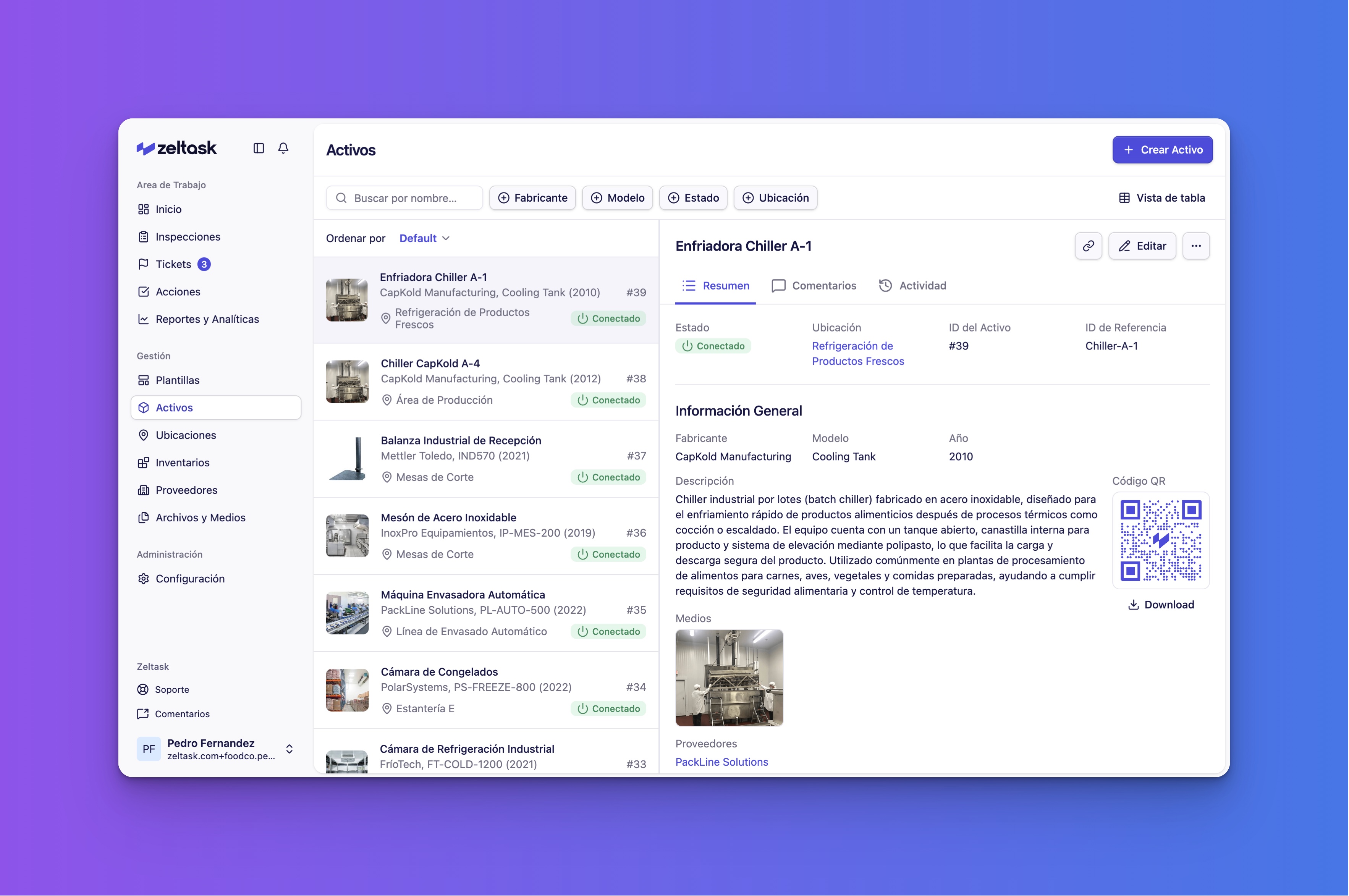
Zeltask's mobile-first approach allows frontline teams to participate in improvement efforts without disrupting their work. QR codes on equipment and locations provide quick access to relevant information and enable immediate action creation.
Standardization Across Sites
For multi-site manufacturers, consistency is essential. Digital platforms enable teams to share templates, procedures, and best practices across facilities. An improvement validated at one plant can be deployed to others quickly.
Zeltask's Templates module allows organizations to build standardized inspection and procedure templates that ensure consistent execution across all locations.
Automated Follow-Through
One of the most common failure points in continuous improvement is incomplete follow-through. Digital systems automate reminders, escalations, and evidence requirements to ensure that actions are completed.
When an inspection identifies an issue, Zeltask can automatically create an action or ticket with assigned ownership and due dates. The system tracks completion and requires evidence before closure—preventing improvements from stalling.
Traceability and Learning
Digital platforms preserve complete records of improvement activities. Teams can review what was tried, what worked, and what didn't. This institutional memory supports better decision-making and prevents repeated mistakes.
Building Continuous Improvement Into Daily Operations
The continuous improvement model is not a program to launch and forget. It requires ongoing discipline and integration into daily routines.
Start with critical processes. Focus initial improvement efforts on areas with the highest impact on quality, safety, or efficiency.
Make improvement visible. Use regular reviews and shared dashboards to keep improvement activities front and center for teams at all levels.
Recognize contributions. Acknowledge frontline workers who identify problems and propose solutions. Recognition reinforces the behaviors that sustain improvement culture.
Connect to business goals. Ensure that improvement priorities align with strategic objectives. This alignment helps secure resources and demonstrates value to leadership.
Review and adapt. Periodically evaluate your improvement program itself. Are teams finding the right issues? Are actions being completed? Is the model delivering results?
Conclusion
The continuous improvement model provides manufacturing teams with a structured approach to identifying problems, implementing solutions, and sustaining better practices over time. By focusing on small, consistent changes rather than large transformation projects, it builds operational excellence incrementally and durably.
When supported by connected operations platforms, continuous improvement becomes more than a methodology—it becomes an embedded capability. Digital tools provide the visibility, accountability, and structure that help teams sustain improvement efforts and scale successes across the organization.
For frontline manufacturing teams committed to operational excellence, the continuous improvement model is an essential discipline.
Ready to see how Zeltask supports continuous improvement in manufacturing? Schedule a demo and discover how connected operations work in practice.
Written by
Felipe Borja
Co-founder & CEO
Felipe Borja studied Business Administration at Adolfo Ibáñez University in Chile and earned an MBA from Leipzig University in Germany. At Zeltask, he is responsible for everything related to marketing and working with our clients.
Related Posts

Causal Factors: Prevent Recurring Problems in Manufacturing
Causal factors are the conditions and actions that directly contribute to manufacturing problems. Learn how to distinguish them from symptoms and root causes, identify them on the shop floor, and use them to build corrective actions that actually stick.

What Is Kaizen Culture? Building Daily Improvement Habits in Manufacturing
Kaizen culture transforms continuous improvement from an occasional project into a daily discipline. Learn how manufacturing teams build, sustain, and scale improvement habits using practical frameworks and connected operations tools.

Empowering frontline teams: the key to operational excellence
Empowering frontline teams is key to solving problems where they actually occur: on the production floor. This article explores how clarity, autonomy, and digital systems turn daily observation into continuous improvement and real results.