
Preventive maintenance: Improving reliability and reducing downtime

Felipe Borja
Co-founder & CEO
Introduction
Preventive maintenance is key to ensuring operational continuity and avoiding unexpected interruptions. This approach prevents asset and facility failures through proper planning, ensuring performance and extending the useful life of machinery. Implementing a preventive plan involves setting goals, inventorying equipment, using appropriate technology, developing KPIs, creating checklists, and continuously optimizing strategies. Although it may generate initial costs for periodic inspections and replacements, the long-term benefits include reduced unplanned downtime, resource savings, and improved product quality. This process, combined with maintenance management software (CMMS) and effective metrics, not only prevents failures but also drives business sustainability and competitiveness.
As CEO and Co-founder of Zeltask, it is my pleasure to welcome you to this content. Our goal is to provide you with a clear and practical introduction to preventive maintenance, highlighting how advanced technologies, such as artificial intelligence and IIoT sensors, can transform business operations. These tools not only optimize processes but also significantly reduce downtime, driving more efficient and proactive management. I hope this reading inspires you to explore new ways to improve the performance of your equipment and take your operations to the next level.
Advantages of Preventive Maintenance
When applied correctly, preventive maintenance offers numerous advantages that far outweigh its costs. Among the main benefits are:
- Reduction of unplanned downtime: Advance planning prevents unscheduled interruptions in production processes.
- Improved safety: A safer environment is ensured for both operators and machinery, reducing occupational hazards.
- Lower workload: Large-scale repairs and repetitive maintenance are performed less frequently, optimizing resources.
- Greater quality control: Proper equipment adjustment reduces rejected products and waste, improving quality.
- Resource optimization: It allows for better control of personnel, materials, and equipment, reducing capital investment.
- Savings in operating costs: Minimizes overtime required for urgent repairs.
- Extended equipment life: By keeping assets in good condition, large expenditures on premature replacements are postponed.
In addition, an effective preventive program ensures that equipment is maintained before problems occur, maximizing its performance and contributing to business sustainability and productivity.
Preventive Maintenance Trends and Statistics
Preventive maintenance is becoming established as a global standard thanks to its growing adoption, technological advances, and positive impact on costs and efficiency.
- Growing adoption: According to the Plant Engineering 2021 industrial maintenance study, 88% of industrial facilities follow a preventive maintenance strategy.
- Investments in technology: The global CMMS software market will grow from $950.4 billion in 2023 to $1.03594 billion in 2024, reaching $2.0643 billion in 2032, according to Strait Research (2024).
- Reduced downtime: Studies confirm that preventive maintenance improves productivity by 25%, reduces maintenance costs by 30%, and extends equipment life by 50%.
Maintenance Challenges
Reactive maintenance, while sometimes necessary, creates multiple challenges that can severely impact a company's operations. Here are some of the main challenges:
Main problem:
Unplanned downtime has a devastating financial impact globally, with an average cost of $260,000 per hour for industrial companies.
These interruptions not only paralyze productivity, but also significantly affect revenue.
Other key challenges:
- Prevalence of reactive maintenance:Without the implementation of computer-aided maintenance management software (CMMS), 59% of companies spend most of their time on reactive maintenance, limiting their ability to adopt more efficient strategies.
- Fragmented data: Operating without CMMS contributes to a 20% reduction in productivity, delays critical decision-making, and hinders collaboration between teams, creating operational bottlenecks.
- Skilled labor shortage: The industrial sector faces an impending labor crisis, with 1.9 million manufacturing jobs at risk of becoming vacant by 2033 due to the mass retirement of experienced workers and a lack of trained personnel.
Types of Preventive Maintenance
Preventive maintenance is a fundamental strategy for ensuring equipment reliability and optimizing resources. There are several approaches that can be combined to suit the specific needs of each organization:
- Time-based maintenance:Tasks are performed at predetermined intervals, based on manufacturer's instructions, industry standards, or internal policies. This approach includes actions such as periodic inspections, lubrication, cleaning, and component replacement to maintain consistent asset performance.
- Usage-based maintenance: This method, ideal for assets with variable demands, organizes maintenance activities according to operating hours or recorded usage cycles, optimizing performance in assets that experience wear and tear from intensive use.
- Condition-based maintenance (CBM): Thanks to real-time monitoring with advanced sensors, the condition of the equipment is analyzed. Interventions are performed only when conditions require it, ensuring more efficient management and reducing unnecessary expenses.
- Reliability-centered maintenance (RCM):This consists of replacing components or systems before they reach the end of their estimated useful life or exceed known failure rates, preventing interruptions and ensuring continuity of operations.
- Proactive replacement or renewal: This involves the early replacement of components or systems based on their expected useful life or known failure rates, avoiding operational disruptions and improving continuity of operations.
These methods can be combined to create a comprehensive maintenance strategy that minimizes downtime, extends equipment life, and optimizes resource management in any industrial environment.
6 Steps for Transitioning to Preventive Maintenance
- Initial inventory and analysis:
Conduct a complete inventory of equipment and assets that require preventive maintenance, including details such as model, serial number, location, and criticality level. This initial analysis will help you identify the most relevant equipment to prioritize actions.
- Definition of tasks and intervals:
Based on manufacturer manuals, industry best practices, and operating conditions, define the specific tasks for each piece of equipment and establish the optimal intervals for its maintenance. Be sure to consider factors such as usage, environment, and criticality.
- Develop a maintenance plan:
Design a detailed plan that documents all activities to be performed, assigned responsibilities, and schedules. Include tasks such as inspections, cleaning, calibrations, and replacement of key components.
- Training and communication:
Train the maintenance team on the new procedures and encourage open communication to ensure effective adoption of the system. Ensure that technicians understand the importance of each task and how they contribute to the success of the program.
- Technology implementation:
Adopt tools such as maintenance management software (CMMS) to schedule tasks, optimize processes, generate early warnings, and keep detailed records of all maintenance activities.
- Monitoring and continuous improvement:
Regularly analyze the data collected, such as downtime, costs, and recurring failures. Adjust preventive maintenance strategies to improve their effectiveness, ensuring that you optimize resources and maximize equipment performance.
This methodology ensures a structured and efficient transition, with long-term benefits in the productivity and sustainability of your operations.
Maintenance Management Software (CMMS) as Your Strategic Ally
Adopting preventive maintenance transcends the technical and becomes a strategic investment that guarantees productivity, reinforces safety, and promotes sustainable and competitive operations in the long term. In this context, maintenance software, such as a computerized maintenance management system (CMMS), is positioned as an essential tool. Its ability to centralize information, automate tasks, and analyze processes not only optimizes preventive maintenance strategies but also makes it an essential strategic ally for improving the operational efficiency of any organization.
Centralized Maintenance Management
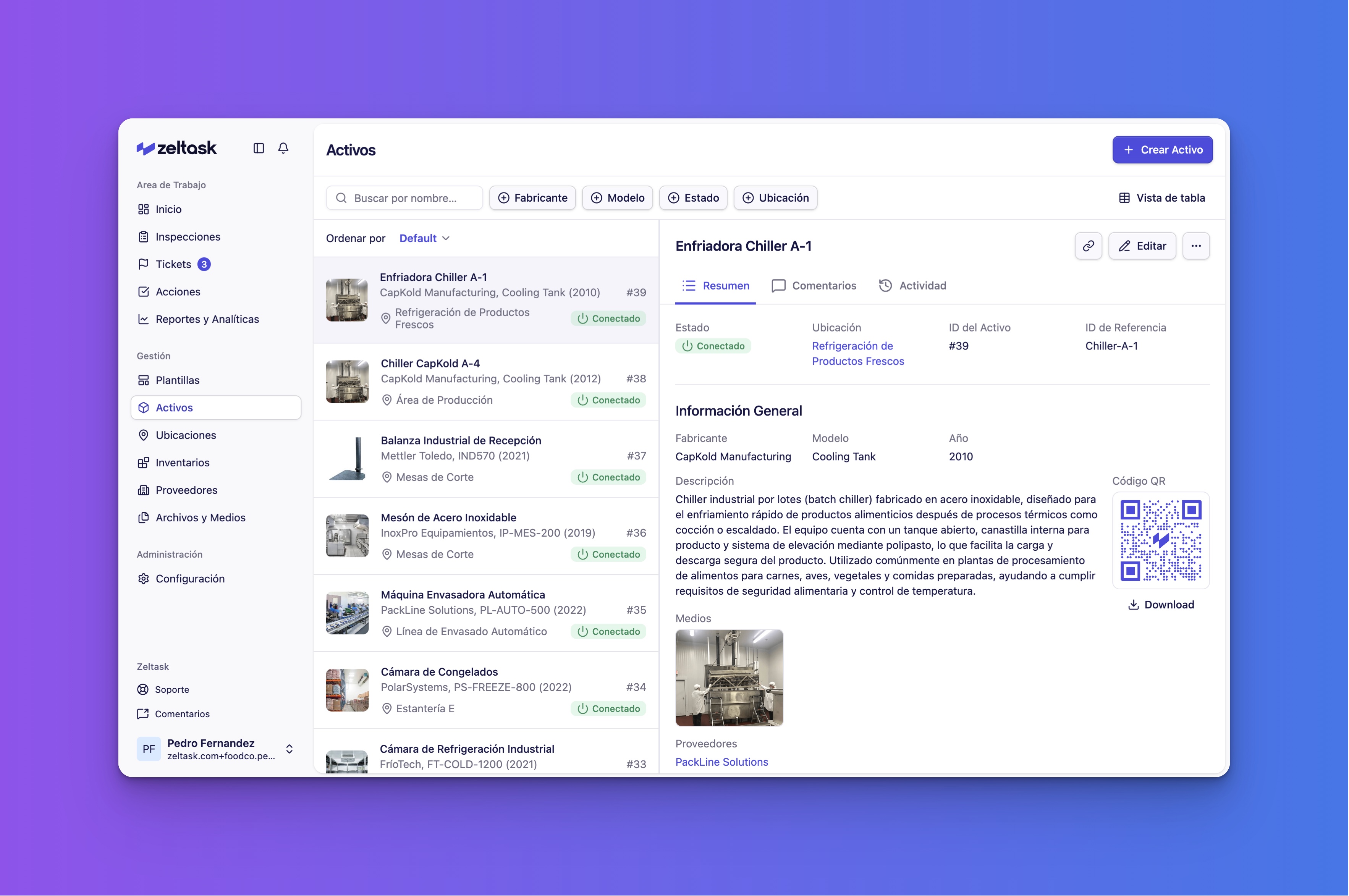
One of its main advantages is centralized maintenance management, providing a single platform where all key information is stored, from equipment history to task scheduling. This eliminates the reliance on manual records and ensures quick and organized access to data by the team.
Work order automation
In addition, with a CMMS, you can automate the generation of work orders, scheduling them according to specific needs. This not only saves time but also ensures consistency in task completion, avoiding omissions that could compromise operations.
Real-time assignment and tracking
Another essential feature is task assignment and tracking, which allows for real-time team coordination, increasing accountability and efficiency. Automatic reminders and notifications ensure that no task is overlooked, maintaining a continuous flow of activities.
Inventory management and performance tracking
The software also stands out for its ability to manage inventories, ensuring the availability of necessary parts, and to maintain a detailed history of equipment performance, which facilitates the identification of recurring problems and data-driven decision-making.
Reports and predictive analytics
Generate detailed reports and predictive analytics to evaluate costs, uptime, and trends. This optimizes maintenance strategies and positions the company with a competitive advantage.
An investment for long-term success
Implementing a CMMS not only improves operational efficiency but also drives sustainability and competitiveness in the market.
Preventive Maintenance with the help of Zeltask: CMMS, AI, and IIoT sensors
At Zeltask, we want to be your strategic ally for preventive maintenance. We understand that optimizing maintenance management is key to the success of any operation. Our solution combines the robustness of a CMMS system with the power of artificial intelligence (AI) and IIoT sensors, offering a superior level of control and efficiency in preventive maintenance.
Accurate failure prediction
With Zeltask, you can anticipate problems:
- Detect imbalances, wear, or misalignments before they become critical failures.
- Avoid unplanned downtime and reduce operational disruptions.
- Minimize costs by preventing emergency repairs and major damage.
Process and resource optimization
Our tool allows you to:
- Schedule maintenance based on real data, eliminating unnecessary interventions.
- Manage inventories efficiently, ensuring the availability of key parts without excess.
- Extend the useful life of assets through continuous monitoring.
Centralization of data for informed decisions
Zeltask centralizes all relevant information:
- Detailed history of costs, vibrations, and maintenance in one place.
- Real-time dashboards with key indicators to optimize decision-making.
- Customized reports that facilitate audits and strategic adjustments.
AI as a co-pilot for your team
Our artificial intelligence powers your operations:
- Diagnoses problems and suggests solutions such as adjustments or component replacement.
- Automates work orders, helping you keep pace and continuously improve.
With Zeltask, maintenance management becomes a strategic tool to maximize efficiency and ensure operational success. We are ready to simplify your day-to-day!
Conclusion
Preventive maintenance is more than a technical strategy; it is an essential approach to ensuring the proper functioning of equipment and machinery, reducing downtime, optimizing resources, and extending the useful life of assets. Its implementation allows you to prevent failures before they occur, reducing unexpected costs and ensuring smooth, safe, and sustainable operation.
In an industrial environment where operational efficiency and competitiveness are critical, having advanced tools such as a CMMS is key to centralizing, automating, and optimizing all maintenance activities. Solutions such as Zeltask not only facilitate task planning and execution, but also leverage technologies such as AI and IIoT sensors to take maintenance to the next level. These tools enable more accurate management, centralized data for informed decisions, and continuous monitoring to ensure maximum efficiency.
Adopting a proactive approach to preventive maintenance not only protects asset investment, but also enhances safety, improves productivity, and enables organizations to remain competitive in a demanding market. In short, preventive maintenance, supported by innovative technology such as Zeltask, becomes a strategic pillar for long-term success and sustainability.
Written by
Felipe Borja
Co-founder & CEO
Felipe Borja studied Business Administration at Adolfo Ibáñez University in Chile and earned an MBA from Leipzig University in Germany. At Zeltask, he is responsible for everything related to marketing and working with our clients.