

Empowering frontline teams: the key to operational excellence

Felipe Borja
Co-founder & CEO
The shift in power on the production floor
Where do most problems start, and where can they be solved most quickly?
Right on the production floor.
Your frontline workers are the heart of your operation. They are the first to notice when equipment deviates from its rhythm, when a process takes longer than it should, when production slows down, or when quality seems “off.”
Too often, however, these observations get stuck in paper forms, routine escalations, or silence.
Empowering the front line isn't about slogans. It's about changing the way organizations operate, so that the people closest to the work can see, decide, and act in real time. Done right, it can increase profits by 5-10%, boost engagement by the same amount, and double productive time on tasks.
This article explores why frontline empowerment is no longer optional, how it's applied in practice, and how digital systems like Zeltask are helping companies connect information with action.
1. Why empowerment is more important than ever
Automation, downsizing, and increasing complexity have redefined what it means to work on the front line. Now, fewer people manage more machines, more data, and more expectations.
However, despite technological advances, one truth remains: operational excellence begins where value is created.
According to the Boston Consulting Group (BCG), most labor costs and efficiency opportunities reside on the front line. When companies give these teams the clarity, autonomy, and tools they need, profits can increase by up to 10% thanks to fewer errors, faster problem solving, and greater team reliability.
But empowerment isn't just financial—it's human. Studies show that engaged frontline workers are safer, more committed, and more innovative. In modern operations, engagement is performance.
2. The economics of frontline focus
Every hour a frontline manager spends in meetings or administrative loops is an hour not spent improving performance.
Cross-functional teams and structured daily schedules help people spend more time on value-adding work and less on bureaucracy. According to BCG, the payoff is quantifiable:
- +5-10% profit growth
- +5-10% increase in engagement
- Twice as much time spent on productive tasks
Empowerment transforms time into value. When workers understand how their actions relate to company goals, whether it's uptime, quality, or customer satisfaction, they stop being task executors and become decision makers.
3. From observation to responsibility
Frontline workers are the first to spot problems. A temperature variation. A recurring noise. A subtle change in product texture. But observation alone is not enough; what matters is what happens next.
Frontline experts must have both the tools and the authority to act. When they can record problems, propose solutions, and see management's response, they take ownership of quality outcomes.
This cycle of accountability drives a simple but powerful cycle:
Observe → Act → Improve → Share → Prevent
Empowerment turns reactive behavior into proactive problem solving and, ultimately, continuous improvement that is built from the bottom up.
4. The four levers of empowerment
4.1 Cross-functional teams
Break down silos. Bringing quality, maintenance, and operations together eliminates redundant meetings and conflicting priorities. When everyone works from the same digital dashboard or shared checklist, administrative turnover decreases and collaboration increases.
4.2 Daily rhythm and reinforced management systems
Establish a predictable cadence: daily meetings, visual boards, and real-time key performance indicators.
These rituals anchor teams around clear goals and reduce decision-making fatigue. Standardized daily routines help teams focus on high-value activities, not paperwork.
4.3 Coaching and skills development
Empowerment without skills is frustrating. Line-led operational excellence begins when supervisors teach structured problem solving. Equip operators with fact-based methods—root cause analysis, 5 Whys, visual diagnostics—so they can act with confidence and consistency.
4.4 Data and digital enablement
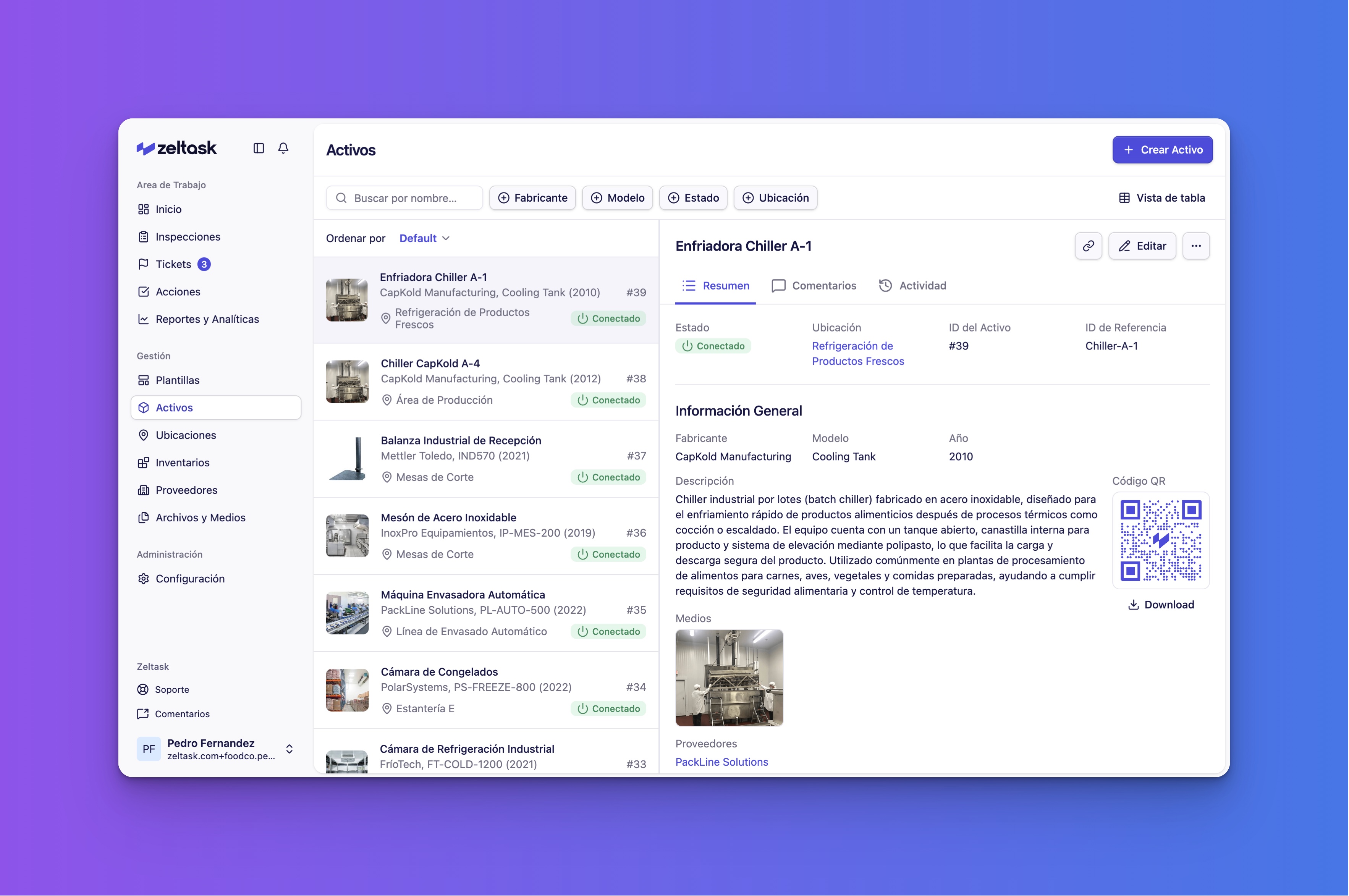
Paper slows down training. Modern frontline solutions (such as Zeltask) shorten the distance between problem and solution.
- Workers record problems on their mobile phones.
- Supervisors gain instant visibility.
- Maintenance can prioritize by urgency.
- Leadership sees performance trends.
Data is only the means, not the end; clarity is. Training thrives when information flows freely to those who can act on it.
5. Culture: Making training a habit
Training fails when treated as a project. It succeeds when it becomes a habit integrated into daily work.
At Zeltask, that means:
- Set achievable goals so teams can see progress and build momentum.
- Recognize both effort and results: every closed loop counts.
- Make knowledge visible: digitize technical knowledge before it disappears.
- Celebrating improvements on the production line, not just top-down initiatives.
When operators see their ideas turn into real changes, a safer process, a cleaner audit, a faster solution, confidence grows.
And with it, responsibility.
Over time, the production plant becomes not just the place where work is done, but where improvement happens.
6. The next frontier: digital operational excellence
The next leap in operational excellence is digital empowerment: connecting people, processes, and performance in a single ecosystem.
When frontline workers have mobile access to knowledge, standard operating procedures, and feedback loops, they can act faster and smarter. When management can visualize the patterns of those actions, they can lead more effectively.
This is where platforms like Zeltask come in, shortening the distance between observation and resolution, connecting teams in real time, and creating a shared rhythm of improvement in maintenance, quality, and production.
In the end, empowerment isn't just a mindset. It's a system that turns every observation into progress and every worker into a leader.
Conclusion: From the production line to the bottom line
Empowering frontline workers is no longer a nice-to-have, but a performance multiplier.
It makes operations safer, teams more engaged, and profits more resilient.
As research shows, when the people closest to the work have a voice, visibility, and the means to act, operational excellence ceases to be a slogan and becomes a way of life.
The question is not whether you should empower your front line.
The question is when you can start.
Works cited:
Boston Consulting Group. What empowering the front line means for results. 2025.
Written by
Felipe Borja
Co-founder & CEO
Felipe Borja studied Business Administration at Adolfo Ibáñez University in Chile and earned an MBA from Leipzig University in Germany. At Zeltask, he is responsible for everything related to marketing and working with our clients.
Related Posts

Causal Factors: Prevent Recurring Problems in Manufacturing
Causal factors are the conditions and actions that directly contribute to manufacturing problems. Learn how to distinguish them from symptoms and root causes, identify them on the shop floor, and use them to build corrective actions that actually stick.

What Is Kaizen Culture? Building Daily Improvement Habits in Manufacturing
Kaizen culture transforms continuous improvement from an occasional project into a daily discipline. Learn how manufacturing teams build, sustain, and scale improvement habits using practical frameworks and connected operations tools.

What Is the Continuous Improvement Model? A Guide for Manufacturing Teams
The continuous improvement model helps manufacturing teams identify inefficiencies, implement solutions, and sustain better practices over time. Learn how this structured approach drives operational excellence and how digital tools amplify its impact.